UGA’s 2026 Charter Lecture focuses on AI-human co-evolution and climate risks
Key Takeaways
- •UGA's exploration of AI-human co-evolution alongside climate risks underscores a critical shift in educational priorities, emphasizing that future literacy must integrate technological advancement with pressing global challenges.
- •This reflects a broader trend towards interdisciplinary curricula that prepare students not just for AI proficiency, but also for its ethical and ecological implications in addressing grand societal issues.
- •Educators must therefore foster critical thinking around AI's role as a societal partner, equipping students to navigate and innovate solutions within this complex, interconnected future.
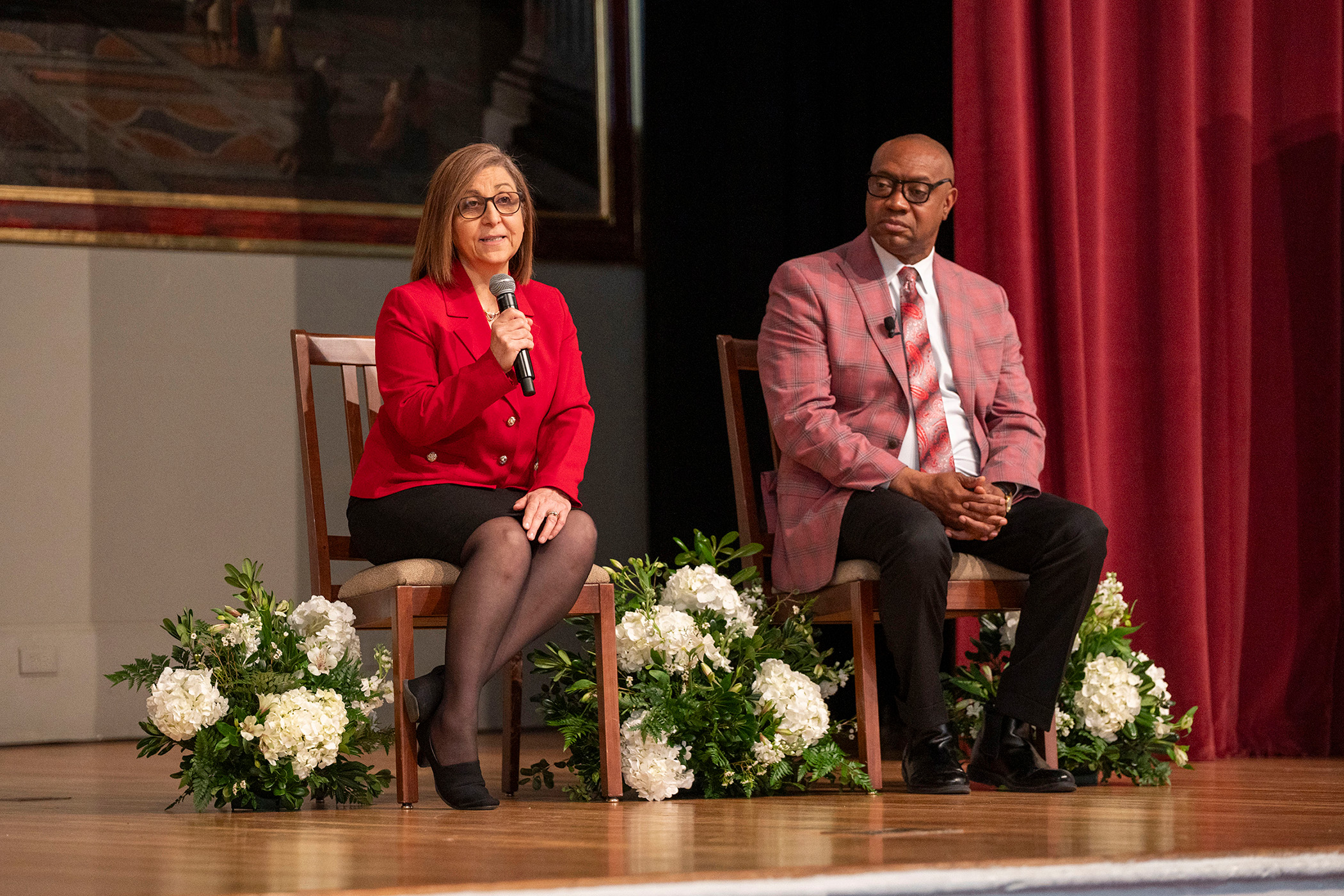
UGA’s 2026 Charter Lecture focuses on AI-human co-evolution and climate risks Mar 31, 2026 — By Mike Wooten Campus News Regents’ Professors Elena Karahanna and J. Marshall Shepherd explore technological transformation and extreme weather impacts Two of the University of Georgia’s most distinguished scholars took the stage at the Chapel on March 25 to discuss the “mutual co-evolution” of humans and artificial intelligence and the rising risks of a more volatile global climate.
Our Take
UGA's exploration of AI-human co-evolution alongside climate risks underscores a critical shift in educational priorities, emphasizing that future literacy must integrate technological advancement with pressing global challenges. This reflects a broader trend towards interdisciplinary curricula that prepare students not just for AI proficiency, but also for its ethical and ecological implications in addressing grand societal issues. Educators must therefore foster critical thinking around AI's role as a societal partner, equipping students to navigate and innovate solutions within this complex, interconnected future.
Topics & Tags
Analysis & Perspectives
Strategic Planning for AI Professional Development: Equipping Educators to Integrate AI as a Pedagogical Partner, Not Just a Tool
This article outlines a strategic framework for professional development, empowering educators to effectively integrate AI into their teaching practices. It moves beyond viewing AI as a mere tool, instead focusing on equipping educators to leverage AI as a sophisticated pedagogical partner. The aim is to enhance learning experiences and foster innovative instructional design.
Redefining Assessment and Feedback Strategies in the Age of Generative AI: From Plagiarism Detection to Promoting Critical AI Literacy
This article explores how the advent of generative AI necessitates a fundamental re-evaluation of assessment and feedback strategies in education. It advocates for a shift from solely focusing on plagiarism detection towards cultivating critical AI literacy among students. The piece outlines innovative approaches to integrate AI responsibly, ensuring academic integrity while equipping learners with essential skills for an AI-driven world.
People Also Ask
Where can I find the latest news on AI in education?▾
What are the most important recent developments in AI for schools?▾
How do I stay updated on news about AI in education?▾
Why is it important for parents to follow news on AI in education?▾
Related Articles
Jisc and EAUC Launch new guide to help Universities and Colleges act on the Environmental Impact of AI
New practical guidance aims to bridge the gap between the accelerated development of AI tools and sustainability ambitions across UK post-16 education and research Launching… Jisc and EAUC Launch new guide to help Universities and Colleges act on the Environmental Impact of AI was published on FE News by Jisc
An Ambitious Course on the Future of AI Ends with a Flourish
An Ambitious Course on the Future of AI Ends with a Flourish Stanford Graduate School of Business
Generative AI Pervades Higher Education: Here’s How Three Institutions Responded
Generative AI Pervades Higher Education: Here’s How Three Institutions Responded The Swarthmore Phoenix