The AI revolution in math has arrived
Key Takeaways
- •AI's emerging capacity to rapidly prove new mathematical results signals a profound shift in the very foundations of the discipline, urging educators to reimagine math curricula and pedagogy beyond traditional problem-solving.
- •This broader trend emphasizes AI's role as an intellectual partner, necessitating a focus on computational thinking and AI fluency to prepare students for a future where mathematical discovery increasingly involves human-AI collaboration.
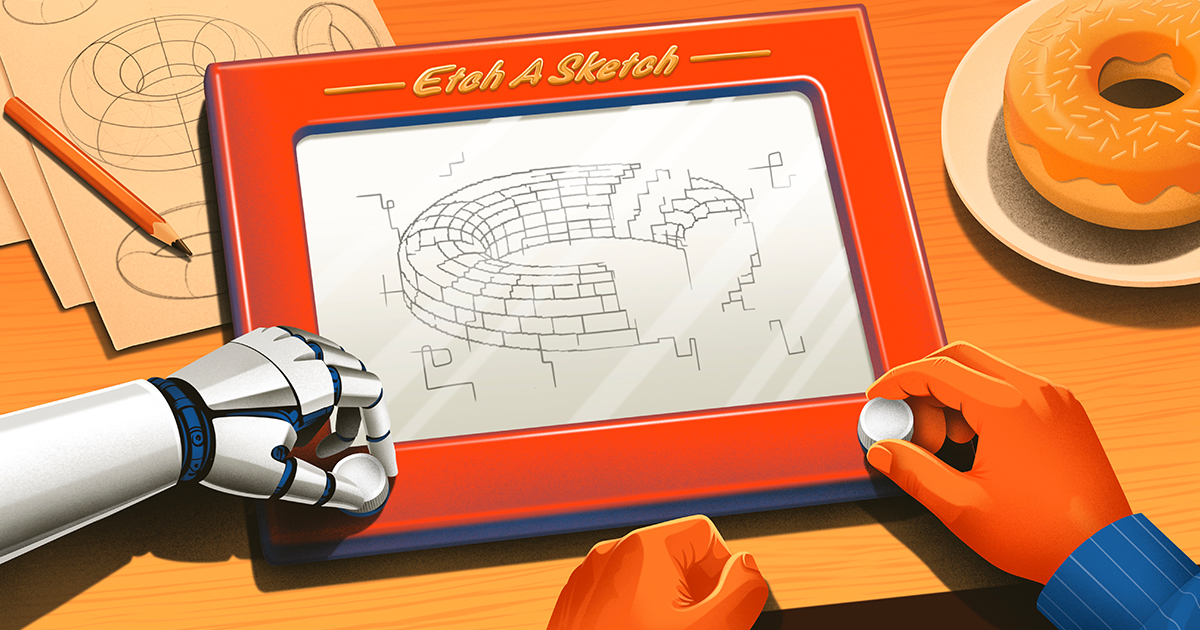
Home The AI Revolution in Math Has Arrived Read Later Share Copied! Comments Read Later Read Later foundations of mathematics The AI Revolution in Math Has Arrived By Konstantin Kakaes April 13, 2026 AI is being used to prove new results at a rapid pace. Mathematicians think this is just the beginning. Read Later Nash Weerasekera for Quanta Magazine Introduction T he tipping point came in the summer of 2025.
Our Take
AI's emerging capacity to rapidly prove new mathematical results signals a profound shift in the very foundations of the discipline, urging educators to reimagine math curricula and pedagogy beyond traditional problem-solving. This broader trend emphasizes AI's role as an intellectual partner, necessitating a focus on computational thinking and AI fluency to prepare students for a future where mathematical discovery increasingly involves human-AI collaboration.
Topics & Tags
Tools Mentioned
Analysis & Perspectives
Strategic Planning for AI Professional Development: Equipping Educators to Integrate AI as a Pedagogical Partner, Not Just a Tool
This article outlines a strategic framework for professional development, empowering educators to effectively integrate AI into their teaching practices. It moves beyond viewing AI as a mere tool, instead focusing on equipping educators to leverage AI as a sophisticated pedagogical partner. The aim is to enhance learning experiences and foster innovative instructional design.
Redefining Assessment and Feedback Strategies in the Age of Generative AI: From Plagiarism Detection to Promoting Critical AI Literacy
This article explores how the advent of generative AI necessitates a fundamental re-evaluation of assessment and feedback strategies in education. It advocates for a shift from solely focusing on plagiarism detection towards cultivating critical AI literacy among students. The piece outlines innovative approaches to integrate AI responsibly, ensuring academic integrity while equipping learners with essential skills for an AI-driven world.
Related Articles
Microsoft researchers have revealed the 40 jobs most exposed to AI—and even teachers make the list
Microsoft researchers have revealed the 40 jobs most exposed to AI—and even teachers make the list Fortune
Gallup: More than half of U.S. college students use AI weekly for coursework
Gallup: More than half of U.S. college students use AI weekly for coursework WSMH
80% of Teachers Are Using AI Tools in the Classroom
80% of Teachers Are Using AI Tools in the Classroom THE Journal: Technological Horizons in Education